






The Lawnmower Blade Guide (Types, Measuring, and More)
The Lawnmower Blade Guide (Types, Measuring, and More)
Lawn Mower Blades: The Ultimate Guide (Types, Measuring, and More)
Buying replacement lawn mower blades is easy if you have the blade part number. With your mower’s model and serial number, you can reference a parts diagram to find the correct blade.
But what if you don’t have that information? How do you know which blade will fit?
By the end of this guide, you’ll have everything you need to confidently choose the right lawn mower blade for your mower.
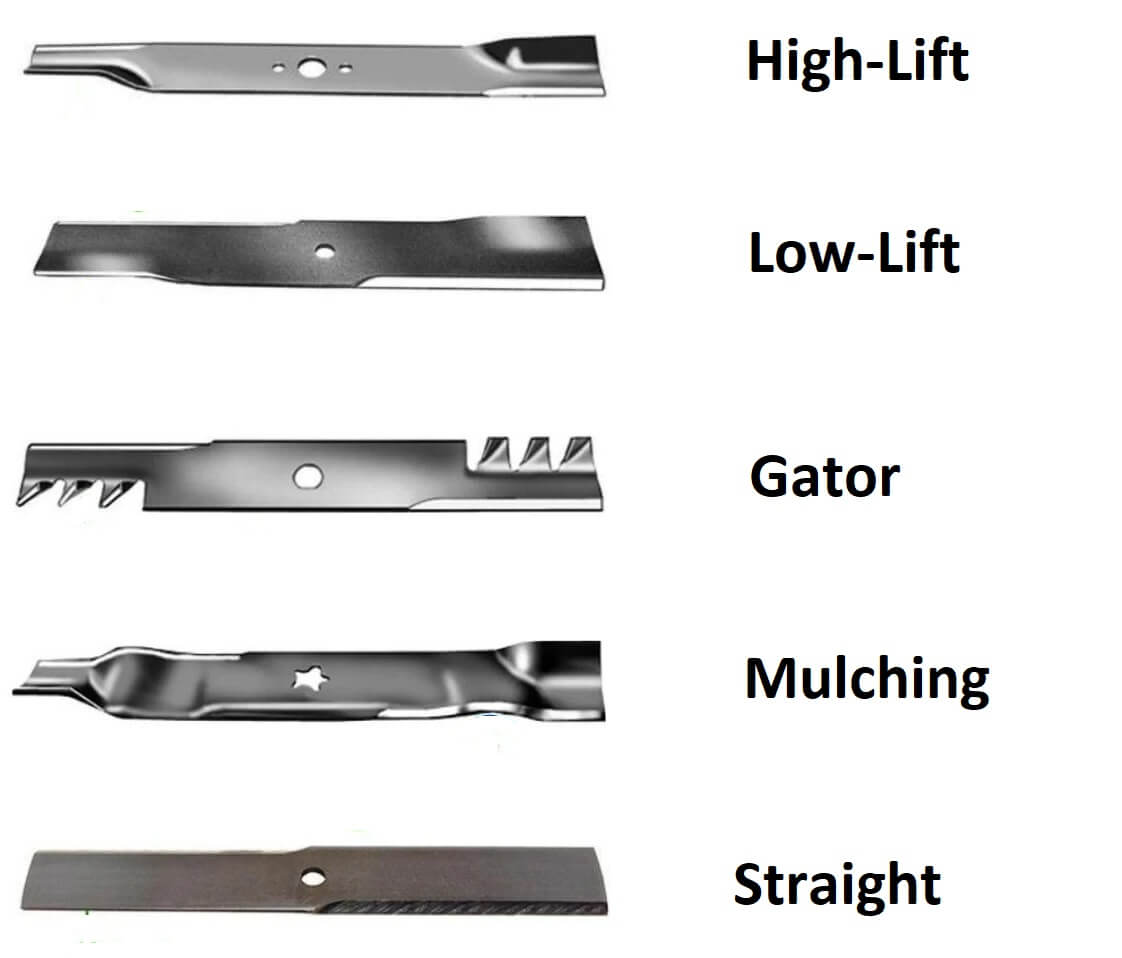
We carry High-Lift Blades, Low-Lift Blades, Gator (3-in-1) Blades, Mulching Blades and Straight Blades. Along with all robot blades.
How to Measure Lawn Mower Blades
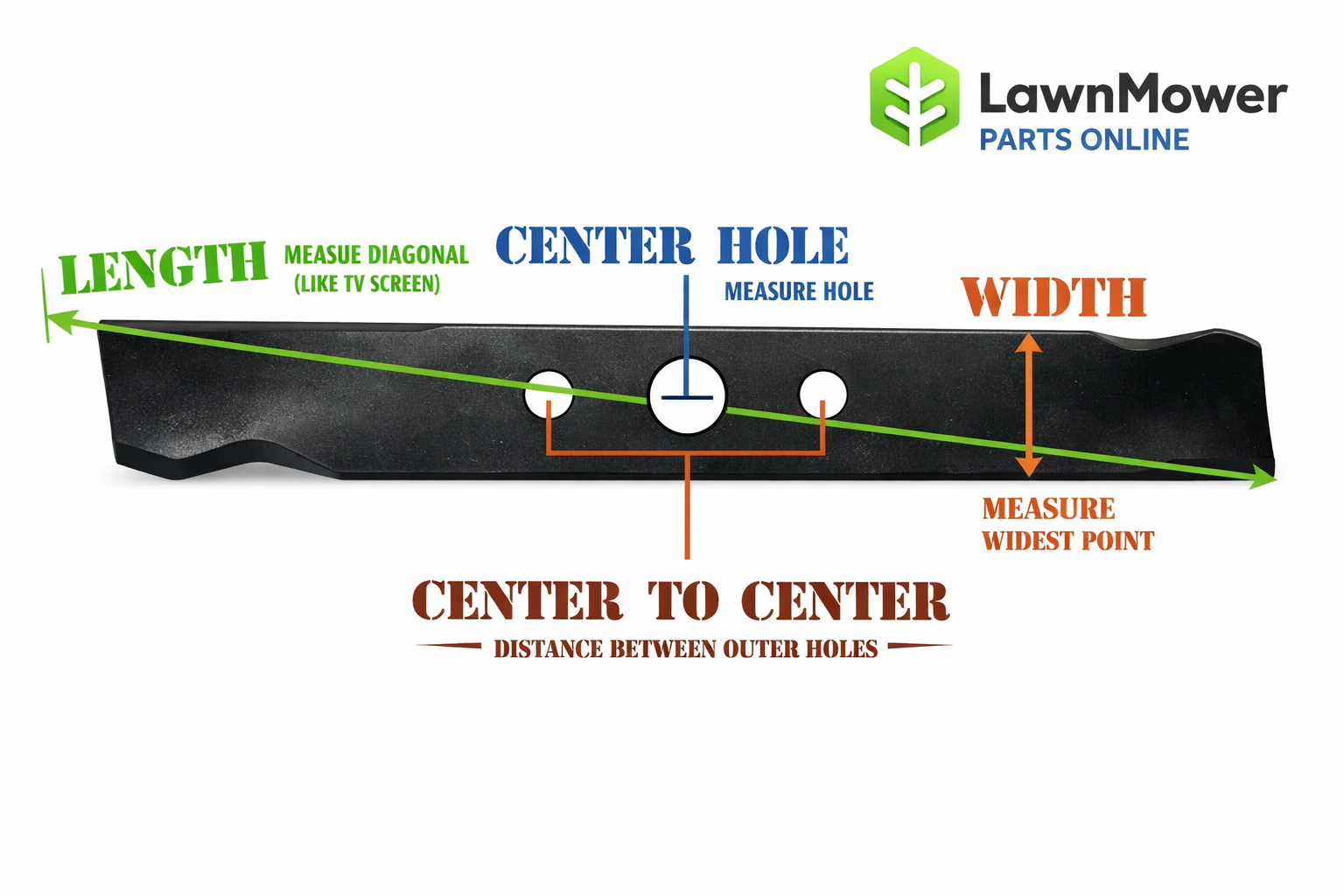
Before selecting a blade type, it’s important to measure your existing blade correctly.
Measure Blade Length Diagonally
The most common mistake is measuring straight across the blade. Always measure diagonally from cutting tip to cutting tip. Keep in mind that used blades may measure slightly shorter due to sharpening.
Center Hole Diameter
Measure straight across the center hole. If your blade has multiple holes, be sure to measure the center hole. If the hole is not circular, identify the shape (star, S-shape, etc.).
Outer Blade Holes
If your blade has two outer holes, measure their diameter and the distance between their centers (center-to-center). These holes help align blades properly on multi-blade decks.
Lawn Mower Blade Center Hole Types
Most blades have round center holes, but other common shapes include stars, squares, and S-shapes depending on the manufacturer.
Right-Hand vs Left-Hand Cut Blades
Most mower blades are right-hand cut, but some manufacturers use left-hand cut blades. Always confirm before purchasing.
Types of Lawn Mower Blades
You may see blades labeled as standard or medium-lift, which offer a balance between high- and low-lift performance.
- High-Lift Blades: Best for tall or cool-season grasses; avoid in sandy soil.
- Low-Lift Blades: Ideal for short, rigid grasses and sandy conditions.
- Gator (3-in-1) Blades: Popular for leaf shredding and overgrown grass, but performance varies by region and grass type.
- Mulching Blades: Designed to finely chop clippings; best when following the 1/3 mowing rule.
- Straight Blades: Used primarily in extremely sandy conditions.
When to Sharpen or Replace Lawn Mower Blades
Blade sharpening frequency depends on usage, grass type, and soil conditions. Dull blades tear grass instead of cutting it cleanly.
Replace blades if:
- Less than ½" remains between the cutting edge and lift
- The blade is bent, cracked, or missing material
- The blade has been sharpened too many times
Never attempt to straighten a bent blade, it compromises safety.
OEM vs Universal Lawn Mower Blades
You don’t have to stick with OEM blades. Aftermarket blades perform just as well as long as blade length, center hole, and outer hole specs match. Universal blades often use elongated holes to fit multiple models. We have universal blades with a washer kit in that fit many Lawnmowers.
Where to Buy Lawn Mower Blades
At Lawnmower Parts Online, we have an extensive range of blades for all machines, if you don't see the blade you need, just get in touch with us and we will help you out.
Lawn Mower Blade Conclusion
- Blade length and center hole diameter are the most important specs
- Match blade type to grass and soil conditions
- Inspect blades regularly for safety and performance
With the right measurements and blade style, choosing the correct lawn mower blade is simple and stress-free.
If you cannot see your blade on our online store please e-mail sales@lawnmowerpartsonline.co.uk
